
NAIROBI, Kenya | September 25, 2026 — Kenyan youth have called for a greater role in governance, access to sustainable economic opportunities and increased investment in digital skills, warning that they can no longer be treated as political mobilisers whose importance ends after elections.
The call was made during the 4th National Youth Convening, held at Ufungamano House from September 21 to 25, 2026, under the theme “Claiming Spaces and Shaping Kenya.”
The five-day meeting brought together young people and stakeholders to discuss governance, leadership, civic participation, employment, entrepreneurship, technology, artificial intelligence and the social and economic pressures facing the younger generation.
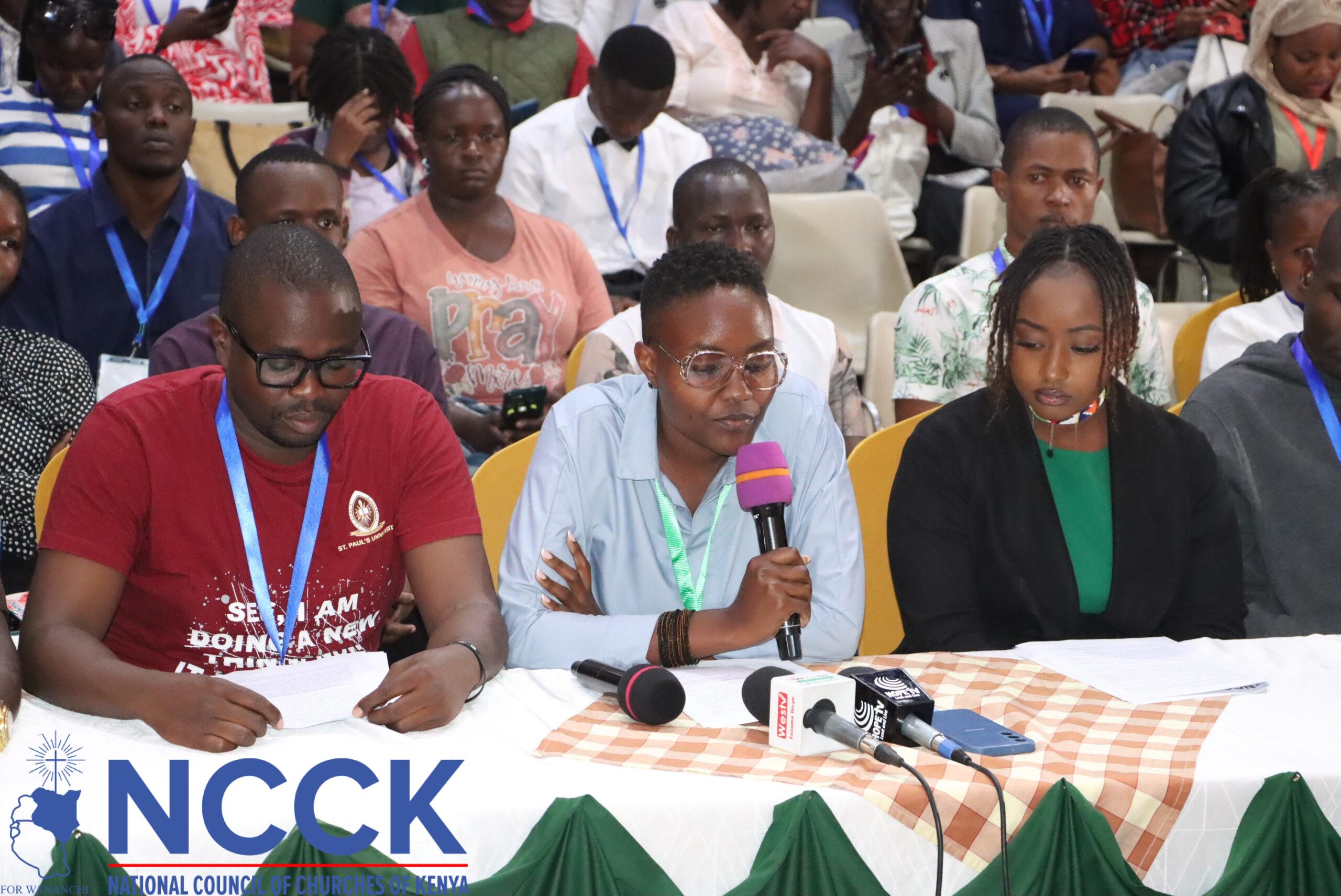
Speaking during a press briefing on Friday, September 25, the closing day of the meeting, Rev. Carolyne Karie, Rev. Silas Rutto and Claire Njagi said young people must be recognised as active participants in determining Kenya’s present and future.
“We recognize that young people are not merely a population to be managed or beneficiaries of decisions made by others. We are citizens, innovators, entrepreneurs, leaders, creators and active partners in shaping the present and future of Kenya,” Rev. Carolyne Karie said.
Youth Reject Election-Only Political Participation
The youth said their participation in national affairs must extend beyond voting and political mobilisation during election periods.
Rev. Silas Rutto said young people want to be continuously involved in policy development, public participation, leadership, oversight and other processes that affect their lives and communities.
“Our participation must go beyond being mobilized during elections or being called upon to vote. We want to participate continuously in policy development, public participation, leadership, oversight and conversations that affect our lives and communities,” Rutto said.
He challenged young people to organise themselves and take an active role in demanding accountability from leaders and public institutions.
“As young people, we also recognize our own responsibility; If we do not organize we will agonize,” Rutto said.
With Kenya approaching another electoral cycle, Rutto urged young people to reject political manipulation, misinformation, disinformation and ethnic mobilisation.
“We reject the use of misinformation, disinformation, political manipulation and ethnic mobilization to divide young people and communities,” he said.
He also called for informed and peaceful participation before, during and after the elections.
Youth Warn Technology Access Alone Will Not Create Jobs
Technology and artificial intelligence emerged as another major focus of the meeting, with participants saying digital tools are opening new opportunities but remain inaccessible to many young people.
Speaking during the briefing, Claire Njagi said technology is already being used by young Kenyans to run businesses, seek employment, create content, access markets and solve community problems.
“For us, technology is not only about sophisticated systems or artificial intelligence. It is the entrepreneur using WhatsApp to reach customers, the graduate using a digital platform to seek employment, the person with disability using assistive technology to access opportunities, and the innovator using available tools to respond to a challenge within their community,” Njagi said.
She, however, warned that access to technology does not automatically translate into economic opportunity.Young people continue to face the high cost of devices and internet connectivity, unreliable power, limited digital skills, inadequate mentorship, lack of capital, certification challenges and restricted access to markets and professional networks.
“We therefore call for technology that connects rather than excludes, creates opportunities rather than deepening inequality, and serves people while protecting dignity,” she said.
The youth also challenged policymakers and other stakeholders to create an environment where young people can transform informal hustles into sustainable businesses capable of creating employment.
Njagi said many young people already possess the creativity and determination required to succeed but lack the systems needed to turn their ideas into viable enterprises.She cited cash-flow constraints, customer retention, competition, taxation, record keeping, registration, licensing and other operational costs among the challenges affecting young enterprises.
Young founders without collateral and established networks, she added, can also struggle to access financing, mentorship, partnerships and professional networks.
Njagi called for an ecosystem that moves ideas “from concept to action, from action to viable solutions, and from viable solutions to sustainable enterprises.”
The youth also called for greater recognition of creative work as a profession and economic product, while urging stronger awareness of intellectual property, ownership and royalties.
Youth Raise Alarm Over AI Misinformation and Digital Safety
While embracing artificial intelligence as a tool for learning, employment, entrepreneurship and creativity, the youth warned that its rapid growth also presents new risks.Karie said concerns include data privacy, digital safety, misinformation, errors in AI-generated information, child protection and over-reliance on technology.
“Technology must strengthen—not replace—human responsibility,” she said.
She said young people must continuously acquire new skills as technology changes the nature of work and the creative economy.
“Young people should not be prepared merely to consume technology; we must be equipped to create with it,” Karie said.
She further urged young people to become more critical consumers of online information, warning that digital platforms can simultaneously facilitate civic participation and entrepreneurship while accelerating misinformation, propaganda and AI-generated content.
Unemployment and Cost of Living Take Toll on Youth Wellbeing
The meeting also highlighted the mental and social pressures created by unemployment, rising living costs, financial difficulties, repeated job rejections and expectations to appear successful.
Karie said the struggles facing young people are not limited to the economy or politics but are also affecting their personal wellbeing.
“Young people may be labelled as lazy, unmotivated, rebellious or unfocused when they are struggling with pain that is not being recognized or supported,” she said.
She called for stronger support systems, safe spaces for honest conversations and appropriate professional care, alongside livelihood programmes that address the broader needs of young people.
The youth said they are prepared to take responsibility for shaping Kenya but want the government and other stakeholders to create practical pathways for them to succeed.
“We cannot be told to innovate and create while the systems around us remain difficult to navigate,” Karie said.
She called for accessible opportunities, affordable digital infrastructure, skills development, financing, mentorship, networks and markets.
Karie also called on the government, private sector, civil society, faith institutions and development partners to move beyond celebrating young people’s potential and invest in the systems that can help them realise it.
The participants further advocated for stronger cooperation between generations, saying the experience of older Kenyans should be combined with the energy, creativity and innovation of young people.